About the author
Each year, U.S. Travel Association’s National Travel & Tourism Week offers an important moment to celebrate the impact of travel across the United States. It’s a week dedicated to recognizing the people, places, and partnerships that drive the tourism economy forward—from the marketers who craft compelling campaigns, to the communities that welcome visitors with open arms. As travelers seek out meaningful experiences, it’s the work behind the scenes that helps destinations thrive and stay top-of-mind.
This week is about honoring the individuals and teams who bring destinations to life through stories, strategy, and sheer passion.
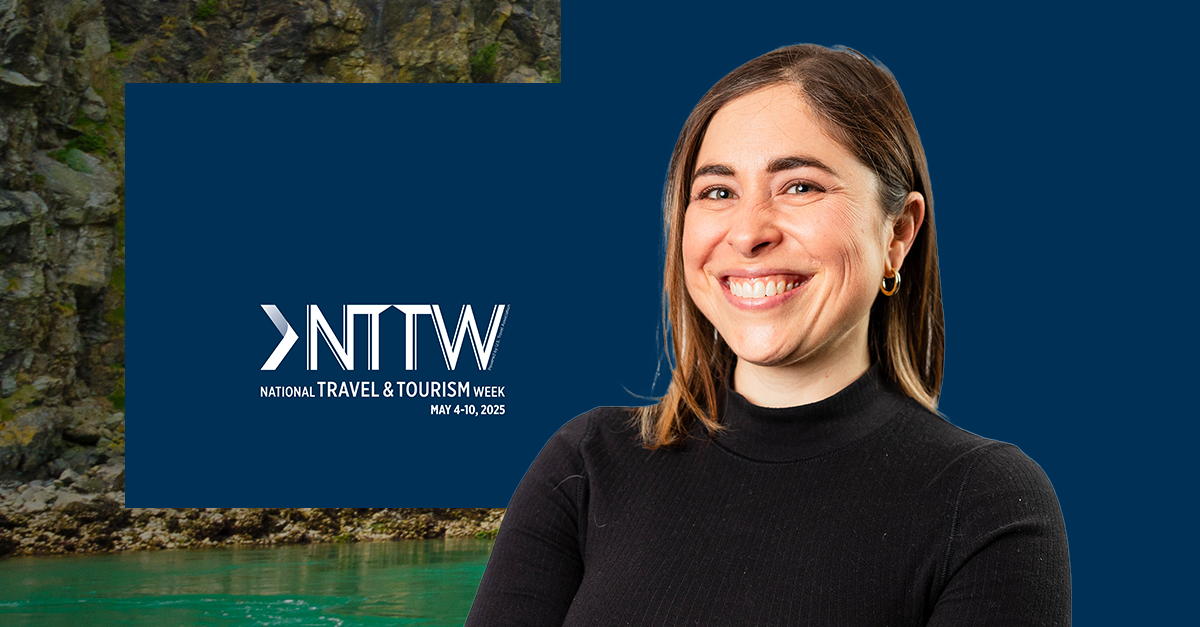
And few people do it better than Emily Hines.
As Content Manager at Envisionit, Emily leads content strategy for some of the country’s most beloved destinations and attractions, helping them connect with audiences through impactful storytelling and engaging digital experiences. With more than a decade of experience in content marketing—including her time as digital content manager at Visit Bloomington—Emily has a deep understanding of what makes a destination resonate.
She’s also the driving force behind Em’s on the Road, a travel blog that reflects her personal love for exploring cities, boutique hotels, restaurants, and hidden gems across the country.
In this special National Travel & Tourism Week interview, Emily shares insights into her approach to destination marketing, and advice for the next generation of storytellers looking to make their mark.
Joe Eisenhardt (JE): Let’s start at the beginning. Everyone in this field has a “spark” moment—when they realized they wanted to help people discover places. What first drew you to the travel and tourism industry?
Emily Hines (EH): In grad school, I studied city planning and historic architecture, which involved a lot of travel around the Southeast United States. It opened my eyes to how much of the U.S. I hadn’t seen—and sparked a desire to explore and share those stories. I started a travel blog, realized brands were looking for writers, and the idea of getting paid to write about travel instantly clicked.
JE: That sounds like a cool moment of alignment between your passions and your purpose. Once you found your footing, what aspects of destination marketing kept you on your toes—and which ones keep you coming back for more? What do you think makes destination marketing both challenging and rewarding?
EH: Places change, as does the industry, so the dynamic nature of destination marketing is both challenging and rewarding. My parents were entrepreneurs as I was growing up, and they inspired me to support small and local businesses. I love that our work helps contribute positively to local economies.
JE: That connection to local economies really highlights the enduring heart of the travel & tourism industry—supporting communities. Over time, though, the tools and tactics have evolved quite a bit. What shifts have stood out most to you? How have you seen the tourism landscape evolve over the last decade?
EH: It’s been really interesting to watch the adoption of social media across generations. That’s something I’m not really sure I believed would’ve happened. Seeing the direct impacts of organic and paid media on a destination is wild. I live in a vacation destination and can definitely see the impact on destinations—like, what kind of destinations get really popular. And with that comes being nimble with copywriting across channels and understanding where your audiences are.
JE: Absolutely—meeting audiences where they are takes adaptability and strategy. That leads me to wonder: how do you define success when it comes to destination marketing? What does successful destination marketing look like to you?
EH: Having an integrated content strategy where paid and organic efforts work together. You don’t want someone clicking on an ad and landing on a social profile that hasn’t been updated in a year—that can look spammy and hurt trust. Your website, blog, and social channels should all be current and aligned. Ideally, when someone discovers your brand, they’re met with fresh content that makes them want to follow, learn more, and eventually convert.
JE: What KPIs do you care about most? What metrics or outcomes meant the most to you when evaluating success?
EH: Engagement is the big one for me—it means people actually care. Whether they’re sharing a post, leaving a comment, or spending time on your site, that kind of interaction shows real interest. It tells me we broke through the noise and made someone feel something. And that’s the first step to getting them to take the next step—whether that’s booking a trip, signing up, or just remembering your brand the next time they’re planning.
JE: For those just beginning their journey in this space, what’s one mindset or approach that’s helped you succeed? What advice would you give to someone just starting out in destination marketing?
EH: Stay curious and nimble. Destination marketing is always evolving, and digital trends change fast—what works today might flop tomorrow. The best way to learn is by testing things and seeing what sticks. Destinations themselves are always shifting too, based on everything from demographics to new attractions or hotel partners. If you’re open to change and ready to try new things, you’ll be great.
JE: And we have seen that an openness to experimentation is such a valuable trait. As the field continues to evolve, what capabilities do you think will separate great destination marketers from the rest? What skills do you think the next generation of destination marketers will need most?
EH: Communication skills are key. In destination marketing, you’re often working with people across different teams, departments, and even partner organizations—so being clear, collaborative, and adaptable is a must. You also need to know how to tailor your message for different audiences, from internal stakeholders to diverse traveler demographics.
JE: Speaking of connections, why do you think it’s important to turn around and lend a hand to those just starting out? Why is it important to you to support and mentor new talent in this field?
EH: Mentorship matters in every field, but especially in one as fast-moving as destination marketing. Learning by doing is great—but having someone who’s been through it share their perspective can make all the difference. It helps build confidence and feel more connected to the work.
JE: That’s such a meaningful way to pay it forward. Let’s get reflective for a moment. What’s one piece of wisdom you wish you’d had earlier in your career? If you could tell your younger self one thing when starting in travel marketing, what would it be?
EH: Say yes to new opportunities—even if they feel a little outside your comfort zone—and don’t be afraid to ask questions. You don’t have to have all the answers right away. Curiosity and flexibility will take you far.
JE: Great advice; especially relevant in such a fast-paced space. The industry always seems to be in flux. What trends or shifts are sparking your interest lately?
EH: I’m really excited about the rise of slow travel experiences. Instead of packing your day with the must-see attractions, travelers are choosing to linger, connect with local culture, and avoid the overly crowded spots. It gives people an opportunity to really learn about a destination and go deeper than a checklist vacation.
JE: That’s really the soul of destination marketing. But, it’s impossible to ignore how tech is shaping our work. What role do you see AI playing in the years ahead? How do you see technology, like AI, playing a role in the future of destination marketing?
EH: I’m interested in seeing how AI can help make travel more inclusive and accessible. From personalized trip planning tools that account for mobility needs to AI-driven translations, voice assistance, and alt-text generation, technology can help remove barriers for differently abled travelers.
Envisionit fuels growth for our travel & tourism clients by leveraging unparalleled industry knowledge with insightful digital strategy, performance-based creative execution, and robust data analysis. Check out some of our work.