About the author

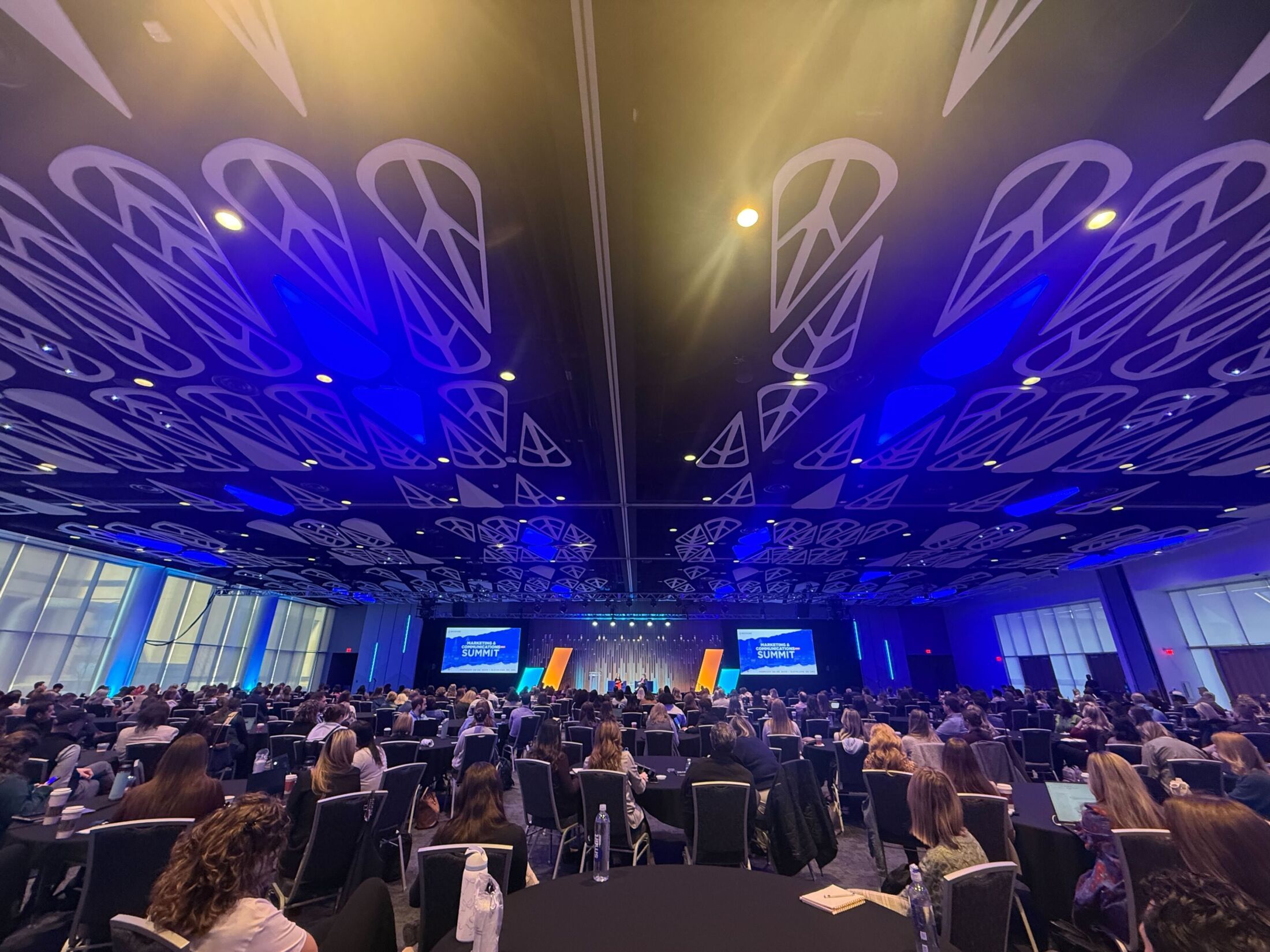
Reflections from the Destinations International 2026 Marketing and Communications Summit
When I left the D.I. MarCom Summit, I had a lot of notes. All of the sessions and conversations provided so much clarity for what it means to lead a modern destination brand.
And across my two days in Cleveland, there was one theme that surfaced again and again. And it echoed what I’ve been hearing in the industry for a while now. The role of the DMO is expanding. And it’s expanding quickly. I’m not talking about more campaigns, or being asked to do more with less. This expansion is bringing in new responsibilities (and opportunities) in storytelling, brand-building, and reputation management.
Here are the moments that stood out most, and what they signal for destination leaders.
Reputation is the real product
Andreas Weissenborn reminded us that destinations don’t just market places. They’re reputation stewards.
Research shared in this session showed that travel decisions are shaped by more than ads or promotions. Travelers pay attention to how a place feels (e.g., socially, politically, culturally). Safety now includes emotional belonging. Trust now includes shared values. That means destination organizations need to think beyond media plans. Reputation is shaped daily, by headlines, civic climate, and community tone. That work is bigger than marketing. And that’s not a burden. It’s an opportunity to lead with clarity.

This reinforces the importance of things we should already be doing. Building relationships with local stakeholders, media, and community leaders so messaging is aligned and authentic. Monitoring sentiment in real time to identify emerging issues before they escalate, and develop clear, values-driven talking points that reflect the destination’s identity.
By consistently amplifying resident voices, highlighting community initiatives, and demonstrating transparency in decision-making, destinations can shape perceptions rather than react to them. Controlling the narrative doesn’t require managing every story. Set the tone, build trust, and show up intentionally every day.
Look at how we leveraged local voices in Choose Chicago’s ‘Never Done, Never Outdone’ campaign, which contributed to their record-setting year of tourism.
In an AI world, human stories win
AI is changing how content gets made. That much is definitely clear. But Andrea Doyle reminded us that people still connect to people.
As AI-generated content increases, human stories become even more valuable. Human experience is still one thing AI can’t replicate. So, the destinations that rise above the noise won’t be the ones producing the most content. They’ll be the ones telling the most honest stories. Real residents. Real culture. Real voice.
Technology may speed things up. But authenticity still slows people down (in a good way).
Influencer marketing is a great way to make connections through storytelling. Check out Influencer Marketing: A Strategic Guide for DMOs for some inspiration.
Data partnerships are the new infrastructure
Katy Gallagher Gill, Agency & Brand Partnerships East, United Airlines
One of the clearest shifts at this year’s Summit came during the Partner Spotlight with Adgenuity and United Airlines. The message was simple and intuitive: AI is only as strong as the data behind it. The impact, however, will be somewhat more complex.
Steph Dunford and Katy Gallagher Gill talked about how airline data partnerships are becoming essential. Not optional… ESSENTIAL.
In the past, data helped optimize campaigns. Now, data proves impact. It connects marketing to passenger movement. It strengthens co-op efforts. It supports conversations with government leaders. In an AI-driven environment, quality data partnerships are not a bonus feature. They are core infrastructure.
So, heads up… DMO stewardship now includes data integrity.
Cultural moments require coordination
Storm Tussey shared a case study that showed how Discover Puerto Rico transformed the global buzz around Bad Bunny’s residency into measurable destination impact. She broke down the strategy behind leveraging a cultural moment to educate travelers, activate new markets, and drive demand.
This is proof that a major cultural moment can drive real economic impact. But what stood out wasn’t just the scale. It was the coordination. The role of the DMO wasn’t to grab attention. It was to align partners, support local businesses, and ensure the benefit extended beyond headlines.
Moments don’t create momentum on their own. They need structure. When destinations act as organizers as well as promoters, tourism lift spreads more evenly across the community.
The more AI automates, the more strategy matters
AI is fully armed and operational. And the time is now for destination marketers to move from dabbling to intentional adoption.
AI is not a replacement for storytelling. It’s an accelerator. Used well, it expands capacity. Used carelessly, it weakens authenticity. Accountability matters. And EVERY output should be reviewed, refined, and owned by a human.
Todd’s session outlined a practical path forward. Improve prompting, build brand-trained assistants, and begin automating defined workflows. AI can handle 80% of tasks, like content calendars, sentiment monitoring, report summaries, and workflow automation, freeing teams to focus on strategy and creative judgment.
This strategic shift is simple but urgent. Organize your data, train AI like you would a new employee, share use cases internally, and protect your brand voice.
As execution becomes automated, competitive advantage moves to human decision-making. There are incredible advantages gained from thoughtful AI implementation, for travelers as well as your DMO team. If you want to learn more about setting up an effective AI process for your destination, request a discovery meeting with Unchained.
Disruption demands discipline
Genesis Leggett, Director of Marketing Communications, Visit Tallahassee
Viral moments happen fast. Faster than most approval processes. And disruption looks different in every city.
Marcus Hibdon shared how political and civil unrest in Portland affected community trust and visitor perception. Travel Portland responded with transparency and a values-driven approach, focusing on honest communication and local alignment. The goal was to simply protect trust.
Genesis Leggett told a lighter story. In Tallahassee, Chip the Armadillo became an unlikely local celebrity and a positive disruptor. Instead of controlling the moment, the team amplified it, turning local excitement into authentic storytelling.
Different situations. Same lesson. Not every moment requires you to take the mic. Sometimes the highest-value move is thoughtful amplification.
In today’s media climate, readiness protects reputation.
Advocacy is everyone’s job
Josiah Brown delivered one of the most important reminders of the Summit. The biggest risk facing destination organizations is not funding cuts… It’s losing belief.
Even when economic data is strong, not all stakeholders are convinced of tourism’s value. That means advocacy should not sit in one department. It lives inside marketing, communications, and leadership.
Story builds belief. Data reinforces it. Consistency sustains it. In a complex civic environment, belief must be earned and re-earned, again and again.
The expanding DMO mandate
DMOs still drive visitation. That hasn’t changed. What has changed is the scope of leadership and responsibilities required to do it well.
Today’s destination organizations must:
- Protect and shape reputation
- Elevate authentic voices
- Build strong data partnerships
- Coordinate ecosystem impact
- Prepare for disruption
- Advocate continuously
The modern DMO sits at the center of brand, community, and economic value. The opportunity is not just to market destinations. It’s to lead them forward.
Need help understanding how these and other emerging trends in our industry should be shaping your efforts? Let’s talk.