About the author

I may be leading off with a real ‘back-in-my-day’ vibe, but here goes…
Facebook used to be about staying in touch with friends and family. Instagram was for photos of food. Twitter (now X) was for real-time thoughts in 140 characters. TikTok was for weird dance trends. And MySpace let your ninth-best friend know their place.
But somewhere along the line, the way we used these social media platforms changed.
As feeds became more visual, audiences got bigger, creators became trusted voices, and algorithms got smarter, people started turning to social apps for specific answers instead of just trends and general updates.
Need a lunch spot? A tutorial? A product review? A weekend itinerary? Users are increasingly searching TikTok and Instagram before they ever open Google.
Social platforms didn’t set out to replace search engines, but user behavior is certainly steering them in that direction. Which means optimizing your social content for search visibility isn’t optional anymore. It’s how you stay discoverable across the entire search ecosystem.

What is social SEO, and why is it important?
At its core, social SEO is just making your social profiles and posts easier to find when people search inside social apps. That includes Facebook, TikTok, Instagram, Pinterest, YouTube, LinkedIn, and anywhere else people are likely to type in a query.
There’s data that shows this behavior is on the rise:
- 40% of users 18–24 use TikTok or Instagram instead of Google Maps to find places to eat
- Social is the #1 place Gen Z, millennials, and Gen X discover new products
- 31% of people search for answers directly on social platforms
And the search engines are catching on, too. Google’s AI Overviews are already pulling insights from social posts, and future ranking systems could depend even more on social signals.
Even though Google isn’t in danger of losing its stranglehold on search to social platforms anytime soon (it still accounts for 91.65% of all search queries globally), research shows that around half of all Google searches (50.3%) include at least one social media platform among the top-10 organic results.
Put simply, if your social content isn’t optimized for search, you’re likely going to be invisible to a large (and growing) chunk of your audience.
How social SEO differs from traditional SEO
Traditional SEO and social SEO may work differently, but they share the same goal: helping people find helpful content. They just take different paths to get there.
Both approaches use keywords, but they show up in different places. In short videos and visual posts (e.g., Reels, TikToks, and carousels) keywords should appear in captions, on-screen text, hashtags, and even spoken content, so the platform knows what the post is about.
The ranking signals are different, too. Traditional SEO cares about site speed, backlinks, and domain authority. Social SEO pays attention to things like likes, comments, shares, saves, and watch time. And while website content can take months to grow, social content can go viral in minutes and fade just as fast.
But the two aren’t as separate as they seem. When your social content performs well, more people click through to your website. They search for your brand more often. And over time, your content may earn backlinks, which help your site rank higher in Google.
The reverse works, too. When your website ranks well, more people discover your content and share it on social media.
So even though they look different, traditional SEO and social SEO feed into each other. They’re not two separate strategies. They’re both part of one big discovery system. Optimizing both together gives you more reach, more traffic, and better results overall.

How to identify high-value topics for social search
Finding the right topics is half the job. Arguably, the most important half. Here’s how you can get started creating content that answers your target audiences’ biggest questions:
1.) Use Creator Search Insights (TikTok)
Research real phrases people are searching for. Look for:
- Repeated questions
- Common pain points
- Trending terms within your niche
2.) Use GA4 to see what drives site traffic
Use this resource to identify:
- Pages with the highest traffic
- Search queries bringing people to your site
Those topics can easily be turned into short social videos or carousels.
3.) Use keyword tools that work for social
- AnswerThePublic
- TikTok Keyword Insights
- Pinterest Trends
- Social listening (e.g., comment sections, DMs, groups, competitor content)
Real life application: For Choose Chicago and Visit Cincy, our SEO and content teams found rising searches for “best things to do in [month]” and “free things to do this weekend.” Those insights came directly from GA4. We repurposed that content across social platforms to answer the same queries users were typing into TikTok and Instagram.
Optimizing your social profiles for search
Treat your social profiles the way you treat your website’s homepage. These can often be the first impression someone gets of your company.
1.) Profile basics
- Use a clear, descriptive handle
- Add keywords to your bio that explain what you offer
- Use link strategies that guide users where you want them to go
2.) Platform-specific tips
- TikTok: Use strategic keywords in captions, on-screen text, and spoken content
- Instagram: Use keywords in captions, alt text, and the profile “name” field.
- Pinterest: Optimize board names, pin titles, and descriptions with searchable terms.
- YouTube: Don’t skip the metadata! Titles, tags, and descriptions matter.
3.) Create a balanced content mix
- Evergreen “how-to” and guide content
- Trend-driven videos for fast engagement
- User-generated content to boost authenticity and indexing
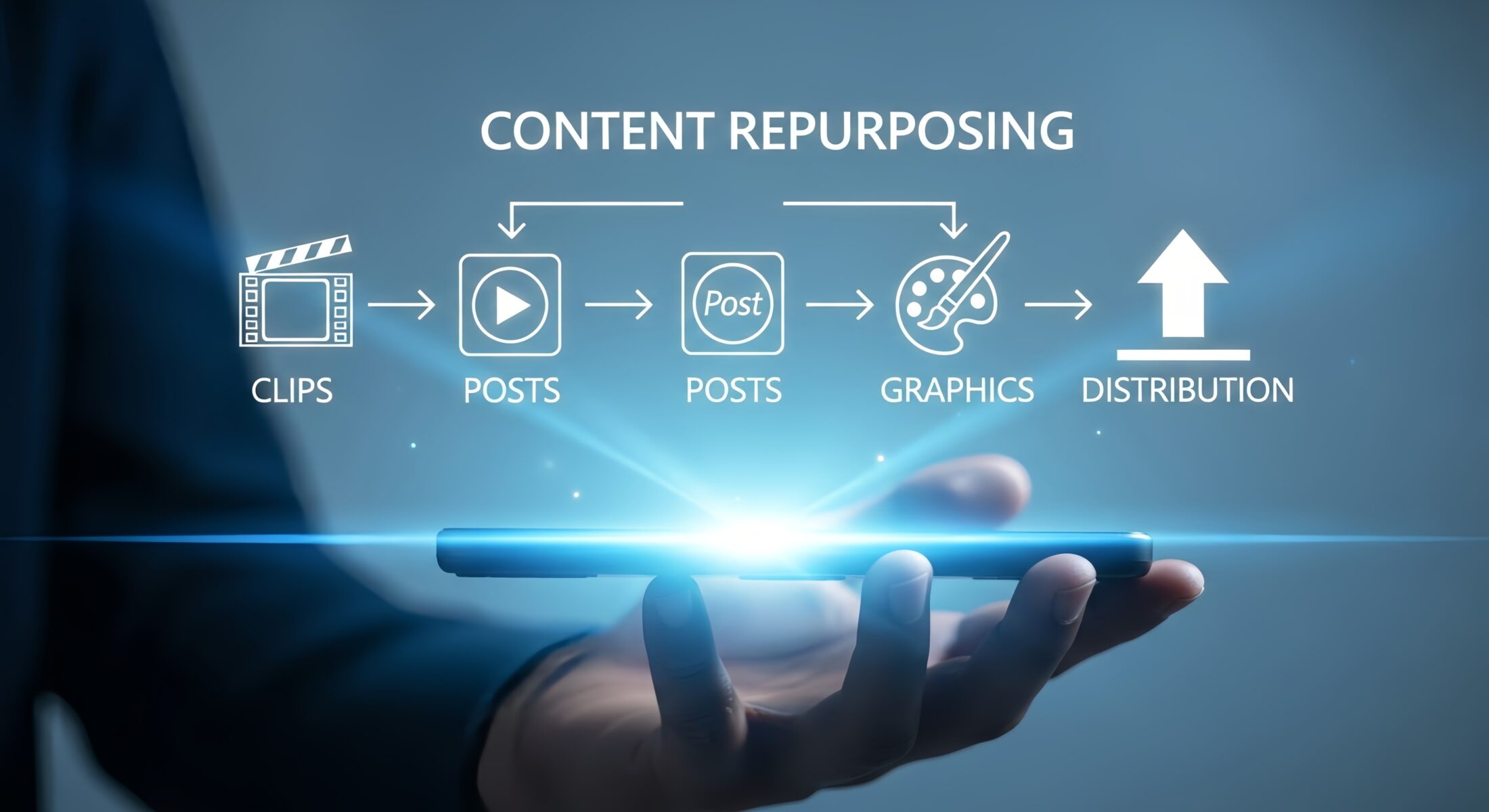
Repurposing content for maximum search visibility
If you only take one thing from this article, let it be this: REPURPOSING IS YOUR SUPERPOWER.
Social search favors volume, recency, and variety. Turning one long-form piece into several social assets is a visibility multiplier.
For example, one blog post can become:
- A LinkedIn carousel
- A TikTok explainer
- An Instagram Reel
- A Pinterest pin
- A short Threads post
I do this all the time, and it works.
How social SEO prepares you for AI Overviews
AI-driven search experiences pull from everywhere: websites, social posts, captions, comments, and more.
When your social content is keyword-aware, structured, clear, and visual, it becomes easier to include in an AI Overview. That means your content shows up in more search paths, even when users never visit your website directly.
This is how you future-proof your content in a search world run by both humans and AI.
Putting it all together for a simple social SEO workflow
Here’s an easy step-by-step process overview to bring this strategy into your daily or weekly workflow:
- Research using GA4, TikTok, Pinterest, and social listening
- Plan evergreen topics + trend-driven moments
- Optimize captions, scripts, text overlays, and alt text
- Publish consistently and watch how your audience interacts
- Repurpose long-form into bite-sized social assets
- Measure reach, saves, referrals, and onsite metrics
Take a little time this week to audit your profiles, look through your top-performing content, and start building for social search. Make sure you’re providing answers to your buyers’ questions, regardless of where they’re asking.
This may seem like a lot, but it’s exactly where our SEO and content teams shine. We help brands show up where their audiences are searching, scrolling, and making decisions. Ready to strengthen your digital presence and start connecting with the people who matter most to your business goals? Let’s talk.