About the author

Why every destination marketer should be listening to the locals
Tourism marketing is all about attracting more visitors. And with that, bringing more dollars into the local economy. But do the people who live there actually want more visitors?
Over the past few years, the conversation has shifted. Destination marketers, DMOs, and CVBs aren’t just tasked with filling hotel rooms and boosting visitor spend. They’re being called on to ensure locals play an active role in the destination’s success, understand the value tourism brings to their community, and feel their voices are heard.
Resident sentiment (i.e., how people in your community feel about tourism) has become one of the most important tools for achieving that. By staying connected, listening to feedback, and tracking attitudes over time, destinations can avoid the kind of backlash seen in cities like Barcelona, where residents are flat-out rejecting tourists.
Done right, tourism doesn’t just benefit the visitor—it strengthens the fabric of the community itself.

Why resident sentiment matters
When residents support tourism, the entire destination benefits. When they don’t, you get friction, resistance, and a whole lot of PR clean-up.
Longwoods International and Destinations International have been tracking this for years. Their latest U.S. Resident Sentiment Report shows that communities who see a clear benefit from tourism are far more likely to support promotional efforts and long-term development.
What’s driving the focus on resident sentiment?
Here are four major trends changing the way we think about destination marketing:
1.) Regenerative tourism
We’ve moved beyond sustainable tourism. Regenerative tourism seeks to leave a destination better than it was before—environmentally, socially, and economically.
In Hawaii, a 2024 study found that when visitors actively contribute to local wellbeing (like beach cleanups or cultural learning), residents are much more likely to support tourism growth.
2.) Community alignment
Local governments, businesses, and residents are now stakeholders AND co-creators of the tourism experience. DMOs that align their strategies with community priorities create stronger brands, healthier economies, and more resilient destinations.
3.) New ROI metrics
It’s no longer just about hotel tax revenue. Forward-thinking DMOs are tracking things like:
- Resident net promoter score (NPS)
- Local business confidence
- Community participation in tourism-related events
- Visitor-resident interaction through geolocation data
4.) Rapid shifts in sentiment
Resident sentiment is almost never static. It fluctuates based on things like crowding, environmental impact, and even headlines. That’s why ongoing measurement that supplements annual surveys is key to catching changes before they turn into crises. And conducting a survey to better understand where your residents sit, taking their feedback and actioning upon it, and using that data as a benchmark to measure progress in future years.
Resident sentiment has emerged as a core factor in the success or failure of your destination strategy. When locals are aligned, everything works better. When they’re not, friction follows.

When residents feel heard and included
Locals who feel valued are more likely to support tourism efforts, promote the destination, and engage positively with visitors.
- Smarter infrastructure planning: Resident feedback helps guide investments that serve both locals and tourists—preventing overuse and underplanning.
- More stakeholder support: Positive sentiment encourages collaboration from elected officials and local businesses, speeding up approvals and buy-in.
- Better visitor experiences: Friendly, engaged communities create welcoming environments that lead to better reviews, return visits, and stronger word of mouth.
Neglecting resident sentiment can quickly turn success into resistance.
- Missed collaboration: Ignoring local input means missing valuable insight from the people closest to the experience.
- Community backlash: Discontent can fuel anti-tourism movements, restrictive policies, and stalled development.
- Travel shaming & PR fallout: Frustrated residents may take to social media, damaging your reputation and discouraging future travel.
What should DMOs do to address resident sentiment?
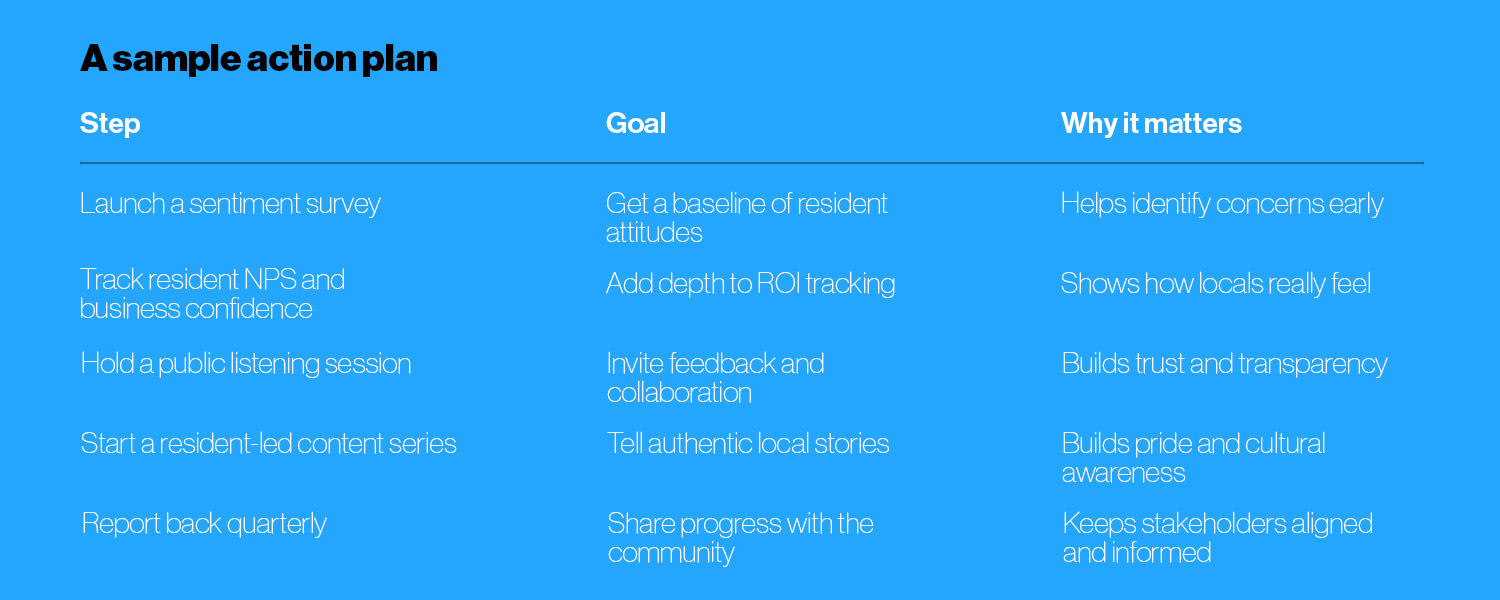
Here’s a quick playbook for measuring and improving resident sentiment in your destination:
1.) Survey with purpose
Establish methodologies and tools to regularly measure:
- Perceived economic benefit
- Social/cultural impact
- Environmental concerns
- Overall quality of life
Include easy-to-track metrics like:
- “How likely are you to recommend your town to a friend?”
- “How has tourism changed your day-to-day life?”
2.) Broaden your ROI metrics
Track things beyond traditional revenue, including:
- Resident and business Net Promoter Scores
- Community participation in events
- Sentiment trends over time
- Movement data to track shared spaces between locals and visitors
3.) Involve the community
- Host resident listening sessions or town halls
- Include residents on advisory boards or planning teams
- Let locals help shape visitor messaging or tourism initiatives
4.) Create campaigns with residents in mind
- Build storytelling campaigns that feature local voices
- Promote resident-friendly events that attract both visitors and locals
- Encourage local businesses to become tourism ambassadors
5.) Be proactive with education
Travel shaming often comes from misaligned expectations. A little education can go a long way:
- Share cultural norms and etiquette with visitors
- Highlight local customs and traditions
- Celebrate stewardship and responsible travel
It’s time to build with the community
Tourism is at its best when it makes life better for everyone. Not just visitors, but the people who call a place home. And resident sentiment is the clearest sign that your strategy is working for the long haul.
Envisionit helps destination marketers build strategies rooted in community, and not just commerce. Because a great place to visit should also be a great place to live.
Ready to reimagine your destination strategy? Let’s talk.