
About the author

There was a time when visitors eagerly grabbed printed guides to discover attractions and plan their adventures. But as the world has become more digital, so have the habits of travelers. From mobile payments to instant messaging and seamless online booking, people now expect information to be accessible at their fingertips. This shift has transformed how destinations must engage their audiences.
Let’s take a look at why it’s time for DMOs to break up with print and embrace a digital-first future.
Why printed visitor guides are becoming obsolete
- Paper costs are rising
- Traveler behavior has shifted to digital
- AI-driven digital content strategies ensure visibility
The rising cost of paper is a financial strain on DMOs
Recent Canadian tariffs on paper imports have surged by 25%, significantly impacting the cost of producing printed visitor guides. Without delving into the politics behind it, this decision carries significant financial implications for DMOs—and many may not even realize it yet.
Key statistics:
- Canada supplies two-thirds of imported U.S. forest products, including paper
- 72% of Canada’s total newsprint production is exported to the U.S.
- The North American paper and packaging industry is highly integrated, with companies like Smurfit Westrock and International Paper operating across borders
- The disruption caused by tariffs further complicates the supply chain, adding another layer of financial strain to DMOs still investing in print.
These cost increases alone should make print a less attractive, and less viable option for DMOs still relying on traditional visitor guides.
AI-driven travel planning and the DMO shift to digital
As AI-powered trip planning becomes more sophisticated and convenient, traveler behavior is trending toward digital. According to the Digital Travel Market Report 2025, the digital travel market is expected to grow from $423.94 billion in 2024 to $484.18 billion in 2025, a 14.2% CAGR. A recent Hilton report showed that 80% of travelers prefer to plan their vacations entirely online. And a survey from GuideGeek revealed that more than 70% of travelers use AI to discover activities and attractions, and almost 58% say AI has saved them time in the trip-planning process.
These AI-generated recommendations and digital journeys are replacing printed guides, providing travelers with real-time, personalized suggestions. For DMOs, this shift presents a clear opportunity to invest in a digital-first content strategy.
QR codes as alternative to printed visitor guides
For seamless transition away from printed materials, QR codes offer a simple yet powerful solution. Rather than distributing static visitor guides that quickly become outdated, QR codes direct travelers to digital resources that can be updated in real time.
The pandemic served as a rapid onboarding for QR code adoption, training people to expect them for accessing menus, sign-up forms, and information. According to a Statista report, approximately 89 million smartphone users in the U.S. scanned a QR code in 2022, marking a 26% increase from 2020. And QR code usage is projected to exceed 100 million users by 2025, highlighting their growing role in digital engagement.
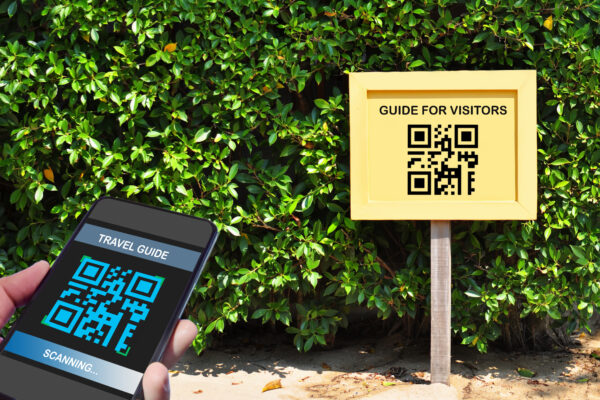
Benefits of QR code-driven digital content
- Instant updates: Unlike print materials, which require costly reprints, digital content linked to QR codes can be refreshed with up-to-date information at minimal expense.
- Easy access: Visitors can scan a QR code to access interactive maps, event schedules, attraction details, and local recommendations.
- Cost-effective: Printing a QR code on a sign, brochure, or business card is significantly cheaper than producing full-fledged guidebooks.
- Sustainable: Reducing print reliance minimizes paper waste and supports eco-friendly destination marketing efforts.
- Better tracking and attribution: Digital content accessed via QR codes allows DMOs to track user engagement, measure campaign effectiveness, and refine marketing strategies.
See how you can elevate your digital marketing campaigns with a more integrated approach.
The future of AI-optimized content over print
Moving away from printed materials is also a move toward a more robust digital strategy that opens a world of new opportunity. The most forward-thinking DMOs are reallocating budgets toward digital content that is searchable, dynamic, and AI-friendly.To remain visible in AI-driven searches, DMOs must optimize their digital content strategy.
Key actions for DMOs to develop a stronger digital strategy:
- Prioritize AI-readable content
- Structure websites with keyword-rich, well-organized content
- Ensure AI tools can easily access and surface key attractions and travel tips
- Invest in dynamic, real-time digital content
- Leverage blogs, interactive maps, and user-generated reviews to enhance AI discoverability
- Enable continuous updates instead of static print materials
- Utilize AI for data-driven decisions
- AI analytics can track traveler behavior, optimize content, and improve engagement
- Identify gaps in messaging to better attract and convert visitors
Your destination’s next visitor isn’t flipping through a physical guide—they’re asking AI for recommendations. If your content isn’t in that conversation, another destination’s will be. DMOs must meet their audience where they are—not where they wish they were—and shift from printed materials to digital platforms that align with modern traveler behaviors. And now is the time to act.
Envisionit helps DMOs navigate this digital shift by crafting targeted strategies that engage potential travelers where they are, leveraging data-driven marketing, dynamic content, and seamless digital experiences. Let’s talk.
- Tagged in:
- AI,
- digital strategy,
- Travel trends